
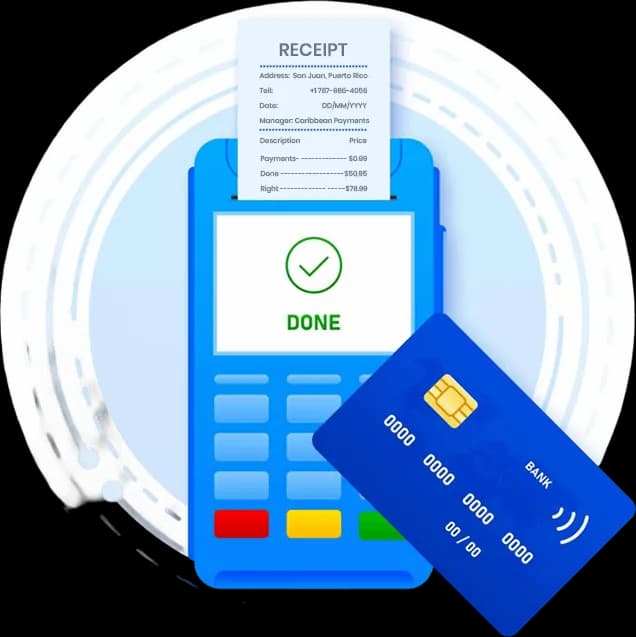
Payments used to change slowly — a new card network here, a chip upgrade there, spread across a decade. That pace is gone. The payment industry trends now reshaping retail are arriving all at once, driven by smartphones in every pocket, always-on connectivity, and customers who expect a purchase to feel effortless. For a small business, understanding where payments are heading is no longer a technology curiosity; it is a competitive question. The merchants who read these trends early will spend less, get paid faster, and lose fewer sales at the moment of checkout.
Contactless and tap-to-pay become the default
The most visible shift is the move from inserting or swiping a card to simply tapping it. Contactless payments have crossed the line from novelty to expectation — customers now reach for a tap before they think about a chip. The technology also collapses several payment types into one gesture: a physical card, a phone, and a smartwatch all speak the same near-field language, so accepting one means accepting nearly all. Newer tap-to-pay solutions go a step further, turning an ordinary smartphone into a card reader with no extra hardware at all, which lowers the barrier for the smallest merchants to accept modern payments anywhere.
Mobile wallets move to center stage
Behind much of the contactless growth are mobile wallets — Apple Pay, Google Pay, and Samsung Pay. What makes them powerful is not just convenience but security: each transaction is tokenized, so the merchant never handles the real card number and there is nothing useful for a thief to intercept. Younger shoppers in particular increasingly treat the phone as their primary way to pay, and businesses that cannot accept a wallet risk looking dated at exactly the moment a customer is ready to buy.
Embedded and omnichannel payments
Payments are dissolving into the experiences around them. Embedded payments place the checkout directly inside an app, a booking flow, or an invoice, so paying feels like a natural step rather than a detour. At the same time, omnichannel expectations mean a customer might browse online, buy on a phone, and pick up in store — and expect their cart, receipts, and loyalty to follow them across every touchpoint. The winning approach is a single set of connected payment solutions that ties in-store, online, and mobile into one system instead of three disconnected ones.
Self-service kiosks and the rise of self-checkout
Labor is tight and customer patience is thinner than ever, and self-service is the industry's answer to both. From quick-service restaurants to retail counters, a self-checkout kiosk lets customers order and pay on their own terms, shortening lines and freeing staff for higher-value work. Well-designed kiosks also tend to lift average ticket size, since unhurried customers browse add-ons and upsells at their own pace rather than feeling rushed by the person behind them in line.
Real-time payments and faster funding
One of the quieter but most consequential trends is the arrival of real-time payment rails that settle in seconds, any hour of any day. For merchants this reshapes cash flow: funds from a sale can become usable far sooner than the traditional next-day or multi-day settlement window. Faster funding smooths payroll, restocking, and the everyday timing pressures that make running a small business stressful, turning the money you have already earned into money you can actually use today.
AI in fraud prevention
As payments speed up, so do the tools that keep them safe. Artificial intelligence now evaluates each transaction against thousands of behavioral signals in real time — device, location, timing, and spending patterns — to catch fraud that a fixed rule set would never see. Just as important, smarter models reduce false declines, approving legitimate purchases that older systems would have wrongly blocked. The result is a layer of protection that works invisibly, defending both the merchant's revenue and the customer's trust.
What it means for Puerto Rico small businesses
None of these trends require a small business to become a technology company. What they require is the right partner. A Puerto Rico café, salon, or repair shop can adopt tap-to-pay, accept mobile wallets, add a kiosk, and benefit from AI-driven fraud protection with the same equipment and one relationship — provided the processor behind it is built for local businesses. That is the approach we take at Caribbean Payments: modern, connected tools with local support, so island merchants can meet 2026 expectations without a technology team. The trends are not a threat to small business; handled well, they are the fastest way to compete with the largest retailers on convenience and trust.