
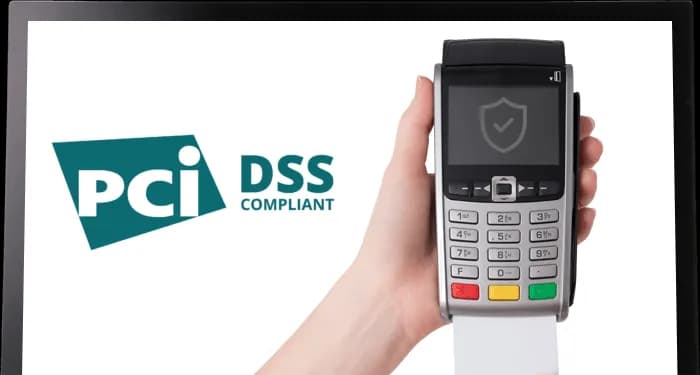
If your business accepts credit or debit cards, you are already part of a global system built to protect cardholder data — and that system has rules. PCI compliance for small business owners is often treated as intimidating fine print, but at its heart it is a common-sense checklist for handling payment data safely. Get the basics right and it protects your customers, your reputation, and your bottom line.
What is PCI DSS?
PCI DSS stands for the Payment Card Industry Data Security Standard. It is a set of security requirements created and maintained by the major card brands — Visa, Mastercard, American Express, Discover, and JCB — through the PCI Security Standards Council. Any organization that stores, processes, or transmits cardholder data must follow it. It is not a government law, but it is enforced through your merchant agreement, which makes it mandatory in practice for every business that takes cards.
Why PCI compliance matters
Card data is valuable to criminals, and small businesses are frequent targets precisely because they are assumed to have weaker defenses. Compliance matters for three practical reasons: it reduces the chance of a costly breach, it keeps you in good standing with your processor and card networks, and it protects the trust your customers place in you every time they hand over a card. A single breach can bring fines, forensic costs, and reputational damage that a small business may never recover from.
The 12 requirements at a glance
PCI DSS is organized into twelve core requirements grouped under six control objectives. You do not need to memorize them, but knowing the shape of the standard helps you understand what your processor handles and what you own:
- Install and maintain firewall protection for cardholder data.
- Do not use vendor-supplied defaults for passwords and security settings.
- Protect stored cardholder data — better yet, avoid storing it at all.
- Encrypt cardholder data when it travels across open, public networks.
- Use and regularly update anti-virus and anti-malware protection.
- Develop and maintain secure systems and applications.
- Restrict access to cardholder data on a business need-to-know basis.
- Assign a unique ID to each person with computer access.
- Restrict physical access to cardholder data and payment devices.
- Track and monitor all access to network resources and card data.
- Regularly test security systems and processes.
- Maintain a written policy that addresses information security.
Understanding SAQ levels
Most small merchants validate compliance by completing a Self-Assessment Questionnaire, or SAQ. There are several versions, and which one applies depends entirely on how you accept payments. A business using a standalone, encrypted terminal that never stores card data completes a short questionnaire, while a business that handles card numbers through its own website or software faces a longer, more demanding one. The single best way to simplify your SAQ is to let validated equipment and a hosted payment page keep raw card data out of your environment altogether.
Staying compliant year-round
PCI compliance is not a one-time checkbox — it is an ongoing habit. Practical steps that keep small businesses covered include changing default passwords, keeping software and terminals updated, limiting who can touch payment systems, training staff to spot skimming and phishing, and completing your annual assessment and any required network scans on time. None of these are heavy lifts once they become routine, and together they form a strong, everyday defense.
How a payment processor helps
The right processor turns compliance from a burden into a background process. Modern payment solutions use EMV chip readers, point-to-point encryption, and tokenization so that real card numbers never reach your systems — which means there is far less for you to secure and far less that a hacker could ever steal. That is the approach we take at Caribbean Payments: PCI-validated equipment, encrypted transactions, and local guidance so Puerto Rico business owners can stay compliant without becoming security experts. Explore our full range of payment solutions to see how compliant processing fits your business.